Recruitment
Professional Recruitment & Simplicity
Professional recruitment involves sourcing, assessing, and hiring candidates who possess the skills and qualifications required for specific roles within an organization.
Simplicity in recruitment processes ensures efficiency and effectiveness, streamlining the hiring journey for both candidates and hiring managers.
By leveraging modern technologies and strategies, professional recruitment can be simplified, reducing administrative burdens and improving candidate experiences.
Clear communication and transparent processes are key components of simplifying recruitment, ensuring that expectations are understood by all parties involved.
Ultimately, a simplified professional recruitment approach leads to better outcomes, including higher-quality hires and reduced time-to-fill for open positions.

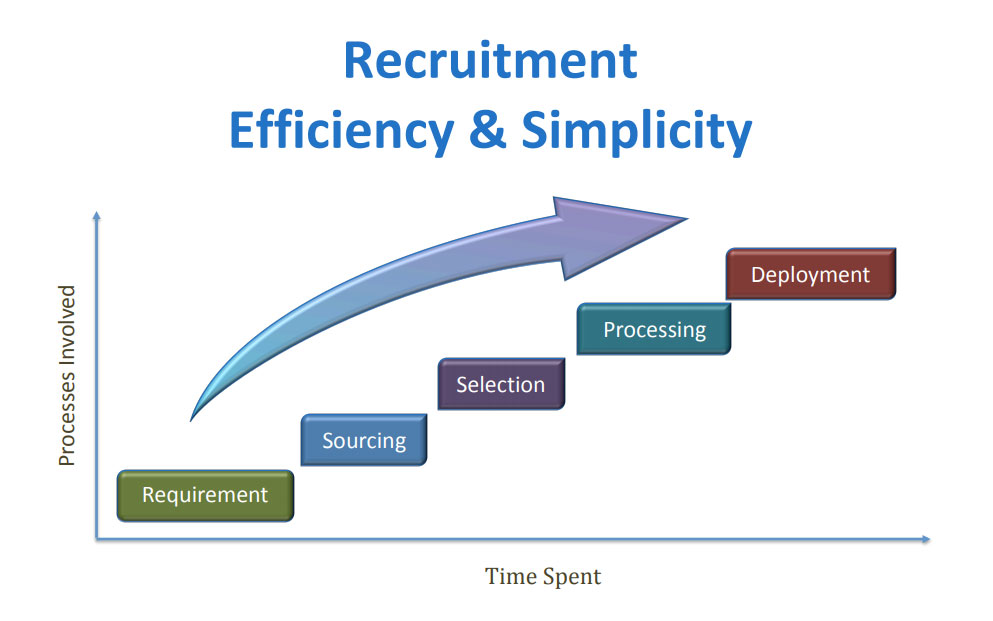
Recruitment Efficiency & Simplicity

Recruitment
The process of attracting candidates for job vacancies through activities like creating job descriptions, posting ads, and reaching out to potential hires via job boards and social media.

Sourcing
Actively seeking and identifying potential candidates through methods like resume databases, referrals, networking, and recruitment agencies.

Selection
Assessing candidates to determine their suitability for a job through activities such as resume screening, interviews, assessments, and reference checks.

Deployment
The final stage of recruitment where the selected candidate is offered the job, undergoes onboarding, and integrates into the organization through orientation and training programs.

Post Selection Processing
Post-selection processing is a critical phase of the recruitment and hiring lifecycle that begins once the final candidate has been selected. This stage ensures that the hiring decision is formally concluded and communicated in a professional, transparent, and timely manner. It plays a key role in reinforcing the employer’s brand, maintaining positive candidate relationships, and ensuring compliance with organizational and legal requirements.
The process involves officially informing the selected candidate of their successful application while also respectfully notifying unsuccessful candidates of the outcome. Clear and courteous communication at this stage helps maintain goodwill and preserves the organization’s reputation in the labor market.
Post-selection processing also includes negotiating the job offer with the selected candidate. This may involve discussions related to salary, benefits, job responsibilities, work location, contract duration, notice period, and any other terms and conditions of employment. These discussions are conducted to ensure mutual understanding and agreement between the employer and the candidate.
Once the terms are agreed upon, a formal offer letter is issued, followed by the preparation and finalization of the employment contract. This stage includes verifying documentation, completing compliance checks, and ensuring all contractual obligations meet applicable labor laws and organizational policies.
In addition, post-selection processing may involve coordinating pre-employment formalities such as medical examinations, background verification, visa and work permit processing (for international hires), and onboarding preparation. These steps ensure a smooth transition of the candidate into the organization and reduce the risk of delays or compliance issues.
Overall, post-selection processing ensures that the recruitment process concludes in a structured, professional, and efficient manner, enabling the organization to secure the right talent while fostering trust, transparency, and long-term employee engagement.